
The Discipleship Pathway
Advancing the Kingdom - One life at a time.
The discipleship pathway is more than just a process; it embodies the ancient Christian teachings that Jesus used to transform a small group of ordinary men into world-changing disciples. This same discipleship pathway was carried by the early church into hostile cultures, and it is crucial for the remnant to reclaim it today. At its core, discipleship emphasizes intimacy — not just information. Jesus didn’t establish classrooms; He fostered relationships. He invited His disciples into His life, His rhythms, His prayers, His struggles, and His mission.
They abided in Him through presence, not merely by passive listening. This discipleship pathway captures that relational, transformative, and multiplying movement. It is the journey that will lead you from awakening to obedience, from spiritual growth to faithfulness, and from faithfulness to multiplication. Ultimately, it is this journey that advances the Kingdom, one life at a time.
Featured Event
Don't miss our upcoming discussion on the calling to disciple. Join us to hear from leaders across various Christian communities as they share their perspectives. We will let you know when these discussions become available.
The Pathway to Biblical Discipleship
Christ said, "Follow Me"
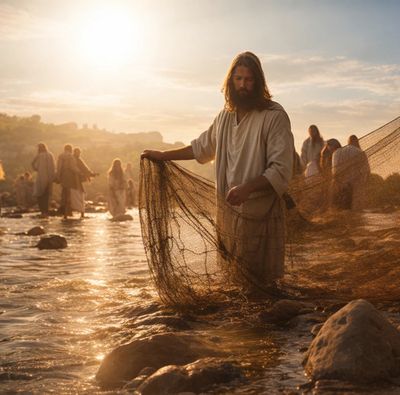
When Jesus walked along the shores of Galilee and said, “Follow Me,” the call was not merely an invitation to comfort — it was a summons to surrender, a vital step on the discipleship pathway. Peter, Andrew, James, and John dropped their nets not because they understood everything, but because something within them awakened. They recognized the voice of the One who calls things to life, a voice that resonates with the core of Christian teachings.
Every disciple’s journey begins with a holy interruption. God stirs something deep within — a longing, a conviction, a restlessness that refuses to be ignored. When this moment occurs, it is sacred. It serves as the spark that ignites transformation and initiates spiritual growth, creating a thirst you will seek to quench until you find it. This is the first degree of becoming a disciple.
The Formed - Learning to Obey
Forming and Learning
For three years, the disciples followed Jesus — literally covered in the dust of their Rabbi. They learned not only from His words but also from His ways, embodying the essence of Christian teachings. Formation was not merely academic; it was relational, embodied, and often uncomfortable. Jesus confronted their pride, redirected their assumptions, and reshaped their identity as they embarked on their discipleship pathway.
In this journey of spiritual growth, formation becomes deliberately uncomfortable and costly. It is where Jesus begins to peel away the layers of the old life and rebuild us from the inside out. This is the second degree of discipleship, and the phase is slow, deliberate, and deeply personal. It is where Scripture becomes nourishment, obedience becomes joy, and the Spirit begins to carve the likeness of Christ into the soul. Forming and learning are done through grace with other disciples. You are never alone, never abandoned, and never just a number on a list.

The Faithful - Living the Way of Jesus
Testing Faithfulness
When Jesus sent the disciples out two by two, He was testing their faithfulness within the context of Christian teachings. They were no longer merely learners — they were practitioners on their discipleship pathway. They healed the sick, proclaimed the kingdom, and faced rejection. Their faith was no longer theoretical; it was lived out in action.
Faithfulness is the proving ground of discipleship, a crucial aspect of spiritual growth. It is where convictions are tested, where obedience is refined, and where the disciple learns to stand firm in a world that pulls in every direction. This phase is marked by perseverance — the quiet, steady resolve to live the way of Jesus when no one is watching. It is the life that shines in darkness, the life that carries the fragrance of Christ into ordinary places. Scripture reveals that we can have a form of Perichoretic Unity with Christ—the third degree of discipleship on Earth.

The MULTIPLIER - Making Disciples Who Make Disciples
Welcome to Spirit and Truth Discipleship
Paul told Timothy, “Entrust what you have heard to faithful men who will teach others also.” This encapsulates the biblical blueprint for multiplication — four generations of discipleship in a single sentence, reflecting essential Christian teachings. Jesus never intended addition; He aimed for exponential reproduction in the discipleship pathway.
Multipliers are the heartbeat of kingdom expansion. They recognize that true discipleship is not complete until it reproduces and fosters spiritual growth. Their lives become catalysts — igniting faith, courage, and obedience in others.
This is the fourth degree. In this phase, it’s not about platform, position, gifting, or title. It is about faithfulness to the Great Commission. It is about humbly carrying the flame of Christ into the next generation and watching it spread. However, for the disciple, there is much more, and turning back is unwise according to Jesus.

Prepared in the Wilderness. Strengthened for the Storm

A Letter to Pastors and Leaders
To those entrusted with the care of Christ’s people,
The work of shepherding has never been simple, but in our time, it has become uniquely complex. The pressures placed upon the Church — cultural, spiritual, and personal — have multiplied, while the inner formation of believers has too often been assumed rather than cultivated. Many have come to equate activity with maturity, and participation with transformation. The Pew Survey reflects this unfortunate reality. Yet the Scriptures remind us that the strength of the Church has never rested on numbers, programs, or visibility. It has always rested on the quality of its disciples. So where did we go wrong?
Jesus did not command us to make converts. He commanded us to make disciples — men and women whose lives are being reshaped from the inside out by the presence of God. This is the work that sustains the Church in every generation. It is also the work that requires patience, courage, and a willingness to lead people into the deeper realities of Kingdom-minded life within a discipleship pathway.
Across the country, we are witnessing a rise in Gen Zers who attend church after work each day. Many women are admitting they do not necessarily go to find Jesus, but a man. Men are likely seeking women, but I believe that in these groups, the Chosen Few are being called to discipleship. They don't recognize His call. If I entered your Church today and asked someone just one simple question... "Where can I find the One called the disciple?" Could anyone point me to one? He wouldn't be the Pastor, Jesus spoke of this.
The Discipleship Readiness Kit was created to serve you in that work of spiritual growth. It is not meant to replace your teaching or your pastoral care, but to strengthen them — to provide a framework that helps believers move from belief to obedience, from inspiration to formation, from hearing the Word of God like never before to becoming the kind of people who can live it. It is a tool for cultivating discipleship readiness in a time when the Church must be prepared not merely to gather, but to endure what is coming.
The wilderness imagery woven throughout the Readiness Kit is intentional. Scripture shows us that God forms His people in places where distractions fall away, and the heart is revealed. Moses was shaped in the desert before he ever stood before Pharaoh. David learned to trust God in the solitude of the hills before he ever faced Goliath. Jesus Himself was prepared in the wilderness before He began His public ministry. The wilderness is not a detour; it is the place where God prepares His servants for the work ahead. How many young people are evangelizing and calling themselves disciples while in high school or college, and what wilderness allowed distractions to fall away? Our congregations need that kind of preparation. They need discipleship that is not hurried, shallow, or dependent on emotional momentum, resembling a secular music concert disguised as Christian. They need discipleship that teaches them to stand when the world shakes, to discern truth in a time of confusion, and to remain faithful when faithfulness becomes costly. They need a discipleship that forms Christ within them.
This kit is offered to you with that purpose in mind. It is a resource for leaders who understand that the future of the Church will not be secured by a process strategy alone, but by the formation of a people who know God, trust Him, and obey Him. It is for those who believe that readiness is not optional, but essential.
May the Lord strengthen you as you shepherd His flock. May He give you wisdom for the challenges of this moment, courage for the decisions before you, and joy in the work He has entrusted to your hands. And may this kit serve as a companion in your own calling — a tool for preparing the few who will stand firm because they have learned to abide and to prepare.
Grace and peace to you in Christ Jesus,
Dr. Robert Wentz
Walk in the Dust of the Rabbi
A Letter to Pastors and Leaders
To those entrusted with shaping the people of God,
There is a sacred weight that rests upon every pastor and leader who desires not merely to gather believers, but to form disciples. The work of the Church has always been the work of transformation — the slow, steady shaping of human lives into the likeness of Christ through Christian teachings. Yet in our time, this work is often overshadowed by urgency, activity, and the pressure to produce visible results. But the Kingdom does not advance through hurry; it advances through formation.
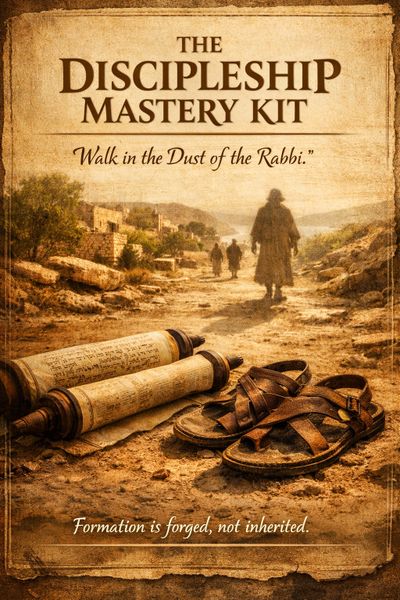
The Discipleship Mastery Kit was created to serve you in this deeper work. It is designed for leaders who understand that discipleship is not merely a class to be completed, but a discipleship pathway to be lived. Jesus did not invite His followers to study Him from a distance; He invited them to walk behind Him, to learn His way of seeing, thinking, and responding. Mastery in the Kingdom is not about expertise — it is about imitation. It is the fruit of a life reordered around the presence of the Rabbi.
In the first century, disciples followed their teacher so closely that the dust of his sandals settled on their clothing. That dust was not a symbol of status; it was a sign of proximity. It meant they had walked where he walked, listened where he taught, and learned to interpret life through his eyes. This kit seeks to restore that vision of discipleship — one in which believers do not simply learn about Jesus but learn to live as He lived. After living as a disciple multiplier for the first three and a half years, I learned to discern the hearts of men and will impart this knowledge to others through teachings in this kit.
The scroll and the sandals, the symbols at the heart of this kit, remind us of the two movements of formation: revelation and response. The scroll represents the teachings that shape the mind; the sandals represent the obedience that shapes the life. Together they form the rhythm of true discipleship — hearing and doing, learning and living, receiving and embodying.
Pastors and leaders today face a profound challenge: many in the Church have been taught the truths of Christ without being trained in the ways of Christ. They know the language of faith, but not always the life of faith. They admire Jesus, but have not yet apprenticed themselves to Him. The Discipleship Mastery Kit is offered as a tool to help bridge that gap — to guide believers from inspiration into incarnation, fostering their spiritual growth.
This kit is not meant to replace your teaching or diminish your pastoral voice. Rather, it is meant to strengthen your work by providing a framework that helps your people move from belief to practice in Biblical study groups. It offers exercises, reflections, and pathways that cultivate the habits of Christ‑likeness — habits that cannot be inherited, only forged.
May this kit serve you as you shepherd the flock entrusted to your care. May it help you lead your people into the kind of discipleship that endures, transforms, and bears fruit. And may it remind you that the greatest gift a leader can offer the Church is not mere activity, but formation — the shaping of lives that walk in the dust of the Rabbi.
Grace and peace to you as you lead with wisdom, patience, and the quiet confidence of those who have learned from Jesus how to live.
Dr. Robert Wentz
Eyes to See, Ears to Hear. A Heart that Discerns
A Letter to Pastors and Leaders
To those who stand watch over the flock of God,
There are seasons when the shepherd’s task is not only to feed but to see — to discern the movement of the Spirit amid the noise of the world. We live in such a season now. The Church is surrounded by voices that promise clarity but deliver confusion, by movements that claim revelation but lack transformation. In times like these, the call of the pastor becomes prophetic: to lead not by reaction, but by revelation; not by strategy, but by sight.
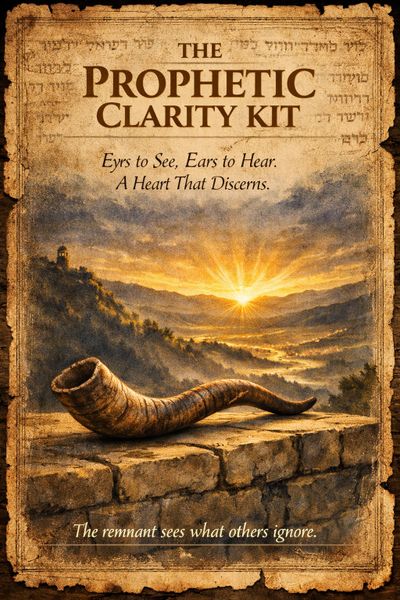
The Prophetic Clarity Kit was created to serve that calling within the context of Christian teachings. It is not a manual for prediction, nor a tool for spectacle. It is a guide for cultivating discernment — the kind of spiritual vision that allows leaders to perceive what God is doing beneath the surface of events. It helps pastors and ministry teams develop the posture of the Watchman: alert, prayerful, and attuned to the dawn breaking over the horizon.
The imagery of the shofar and the watchtower is intentional. The shofar represents awakening — the call to gather the remnant and prepare the people of God for what lies ahead. The watchtower represents perspective — the vantage point from which the shepherd sees the valley clearly and leads with wisdom rather than fear. Together they remind us that prophetic clarity is not about knowing everything, but about seeing rightly and responding faithfully.
Pastoral leadership today requires more than management; it requires discernment and a commitment to a discipleship pathway that fosters spiritual growth. The shepherd must learn to distinguish the voice of the Spirit from the echo of culture, to recognize the difference between movement and momentum, and to lead the Church toward truth even when truth is costly. The prophetic leader does not chase novelty; he seeks reality. He listens until he hears, and he waits until he sees. It is one of the gifts from God to only those He calls.
This kit is offered as a companion for that journey. It provides resources and practices that help leaders cultivate spiritual perception — to see what others ignore, to hear what others dismiss, and to discern what others misunderstand. It is for those who understand that the remnant is not defined by size but by sight. The remnant sees what others ignore because they have learned to look through the eyes of Christ.
May this kit strengthen your ministry. May it help you lead with clarity when the world is clouded with confusion. May it remind you that prophetic leadership is not about possessing insight, but about embodying obedience. And may it awaken in you the courage to stand watch until the dawn breaks and the people of God rise to meet the light.
Grace and peace to you as you lead with eyes that see, ears that hear, and a heart that discerns.
Dr. Robert Wentz